


A Mattress for Back Comfort: How to Sleep Well with Appropriate Body Support
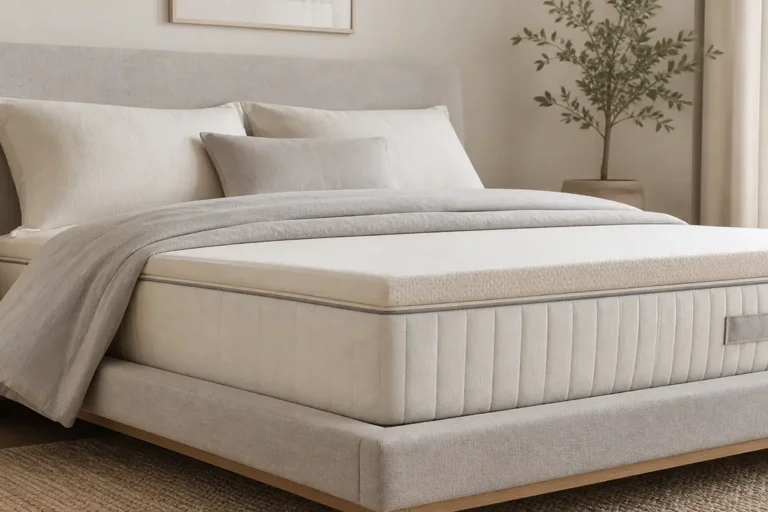
Have you ever awakened with such a sore or stiff back that you did not want to get out of bed? Back discomfort during or after sleep can have many causes, including muscle strain, prolonged sitting, everyday posture, and certain health conditions. The mattress is another factor worth considering, particularly when it does not support the sleeper’s weight and spinal position appropriately.
A “mattress without back pain” should not mean one that promises to cure pain. It should mean a mattress that creates a comfortable sleep surface, distributes pressure, and supports the body without allowing certain areas to sink or be pushed excessively.
How Firmness and Support Affect Spinal Alignment
Firmness describes how the surface feels, while support is the mattress’s ability to carry weight and maintain the body’s position. A soft mattress can provide good support if it has a stable core. Conversely, a hard mattress may provide unsuitable support if it pushes against the shoulders and hips and forces the body away from its natural alignment.
“Spine-neutral” support does not require the spine to form a perfectly straight line. It means preserving its natural curves. When lying on the back, the mattress should support the lumbar area without allowing the hips to sink too deeply. When lying on the side, the head, torso, and pelvis should remain balanced while the shoulders and hips settle appropriately into the surface.
A mattress that is too soft may let the middle of the body sink enough to arch or twist the back. One that is too hard may create pressure around the shoulders, hips, and lower back. A randomized, double-blind trial involving people with chronic lower-back pain found that medium-firm mattresses performed better than firm mattresses in the study group. This does not mean one firmness is suitable for everyone. (PubMed)
Signs Your Mattress May Be Contributing to Back Discomfort
If discomfort occurs mainly after waking and gradually improves once you begin moving, or if you sleep more comfortably in another bed, your present mattress may be one contributing factor. Signs to watch for include:
- Visible or noticeable impressions and an uneven sleeping surface
- Hips sinking much farther than the rest of the body, or a sensation of rolling toward the center
- Frequent position changes caused by pressure around the shoulders, hips, or waist
- New morning stiffness that decreases after sleeping on a different surface
- Slow recovery, uneven support, or unusual noise and movement from the internal structure
These observations do not establish the mattress as the sole cause. The pillow, bed base, sleep position, and daytime activity should also be considered. Persistent or severe pain—or pain accompanied by numbness, weakness, or radiating symptoms—should be discussed with a healthcare professional.
How Latex Balances Pressure Relief and Support
Latex foam is elastic and responds locally to pressure. Where the shoulders or hips carry more weight, the material compresses while the surrounding surface continues to support the torso. This enables latex to balance contouring, weight distribution, and rapid recovery without the deep-sinking sensation associated with some memory foams.
A study of 20 participants found that a latex mattress produced lower peak pressure and more even pressure distribution than polyurethane foam in several sleeping positions. These findings support potential comfort and pressure-distribution benefits, but they do not show that latex treats disease or back pain. (PubMed)
Ventry’s approach emphasizes natural latex and ergonomically focused support under the philosophy “Good Sleep… Good Health.” Nevertheless, the model and firmness should be chosen for the individual sleeper rather than on material alone.
The following general principles can provide a starting point:
- Side sleepers: Often need a soft to medium-firm surface so the shoulders and hips can settle without excessive pressure.
- Back sleepers: Often suit medium to medium-firm support that supports the waist without allowing the hips to sink deeply.
- Stomach sleepers: Usually need a more stable surface to limit sinking around the abdomen and pelvis.
- Lower body weight: The sleeper compresses the material less and may perceive a mattress as firmer than its description.
- Higher body weight: The sleeper compresses the layers more deeply and may need a sturdier support system or additional firmness.
A systematic review of mattress research found that medium-firm mattresses tended to perform well for comfort, sleep quality, and spinal alignment for many people. Body shape, weight, sleeping position, and personal preference remain important variables. (PubMed)
If you’re looking for a mattress designed with the support principles above in mind, Ventry offers a range of latex mattresses. If you’re not ready to replace a full mattress, a latex topper is a way to add extra support to your current one first. For guidance on which model best suits your build or sleep position, feel free to contact Ventry’s team directly.
Frequently Asked Questions
Q: Should people with back pain sleep on the hardest possible mattress?
A: Not necessarily. An excessively hard surface can increase pressure and may not accommodate the body’s curves. Medium-firm is a reasonable starting point for many people, but the mattress should be tested according to the individual’s build and sleeping position.
Q: Should a mattress be replaced as soon as back pain begins?
A: First inspect the mattress for impressions and check the bed base, pillow, sleeping position, and daily activities. If discomfort improves in another bed or the current mattress is clearly deformed, replacement may be reasonable.
Q: Can a latex mattress treat back pain?
A: A latex mattress is not a medical treatment. Its elasticity, pressure distribution, and appropriate support may create a more comfortable sleeping surface. Persistent or severe pain should be evaluated by a healthcare professional.
Latest Post
 29 March 2568
 29 March 2568