


For Your Baby’s Happy Sleep: Choosing a Comfortable and Safe Children’s Mattress
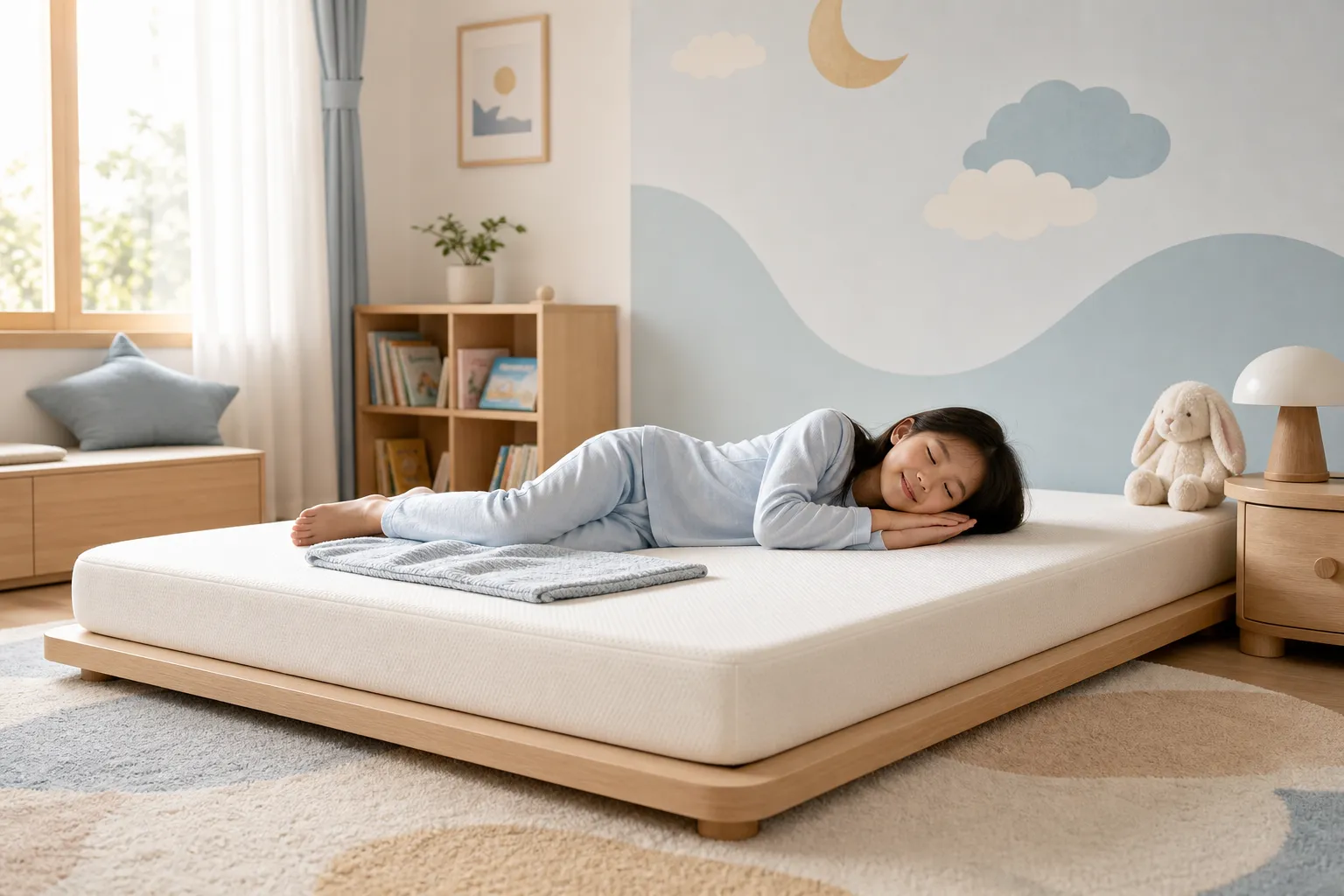
Sleep is an important part of childhood, particularly during infancy and the early years, when the brain and body are changing rapidly. Sufficient sleep is associated with learning, memory, attention, emotional regulation, and overall health. Sleep patterns and duration, however, vary according to age and the individual child. (AASM)
A children’s mattress therefore does more than provide softness. It must form part of an age-appropriate sleeping space. For infants, firmness and correct fit are directly related to safety. Older children need a surface that supports the body evenly and remains comfortable throughout the night.
Why Sleep Quality Matters for Development
During sleep, the brain continues to process information and consolidate what a child learned while awake. Research links sleep with memory formation and nervous-system development. In older children, sufficient sleep is associated with better attention, behavior, learning, and emotional regulation.
“Quality sleep” does not necessarily mean that a baby must sleep continuously through the night. Infants have shorter sleep cycles and may naturally awaken. More important considerations include an age-appropriate routine, a room that is not excessively warm, and a stable, clean, safe sleep area. Parents should consult a pediatrician if a child snores loudly, appears to struggle for breath, wakes with unusual frequency, or has a sleep pattern that causes concern.
What Should Parents Look for in a Safe Children’s Mattress?
For infants, especially during the first year, safe-sleep guidance emphasizes a surface that is firm, flat, level, and noninclined. The mattress should retain its shape rather than indenting around the baby’s head or face. It must fit the intended crib without gaps at the sides. Use only a correctly fitted sheet, and place the baby on their back for every daytime and nighttime sleep. (CDC)
After a child progresses beyond the infant safe-sleep stage, additional cushioning may be considered. The mattress should still distribute weight evenly, remain free of permanent impressions, and prevent excessive sinking around the middle of the body. Lighter children compress mattress materials less, so an extremely hard surface is generally unnecessary. Appropriate firmness should be considered in relation to age, weight, sleeping position, and the manufacturer’s instructions.
Before purchasing, confirm that the mattress is intended for the child’s age and type of bed, fits correctly, clearly identifies its manufacturer and materials, and meets applicable requirements for firmness, durability, flammability, and chemical safety in the country of sale. Terms such as “chemical-free” or “hypoallergenic” do not replace verifiable testing and safety information.
How Natural Latex May Suit Children
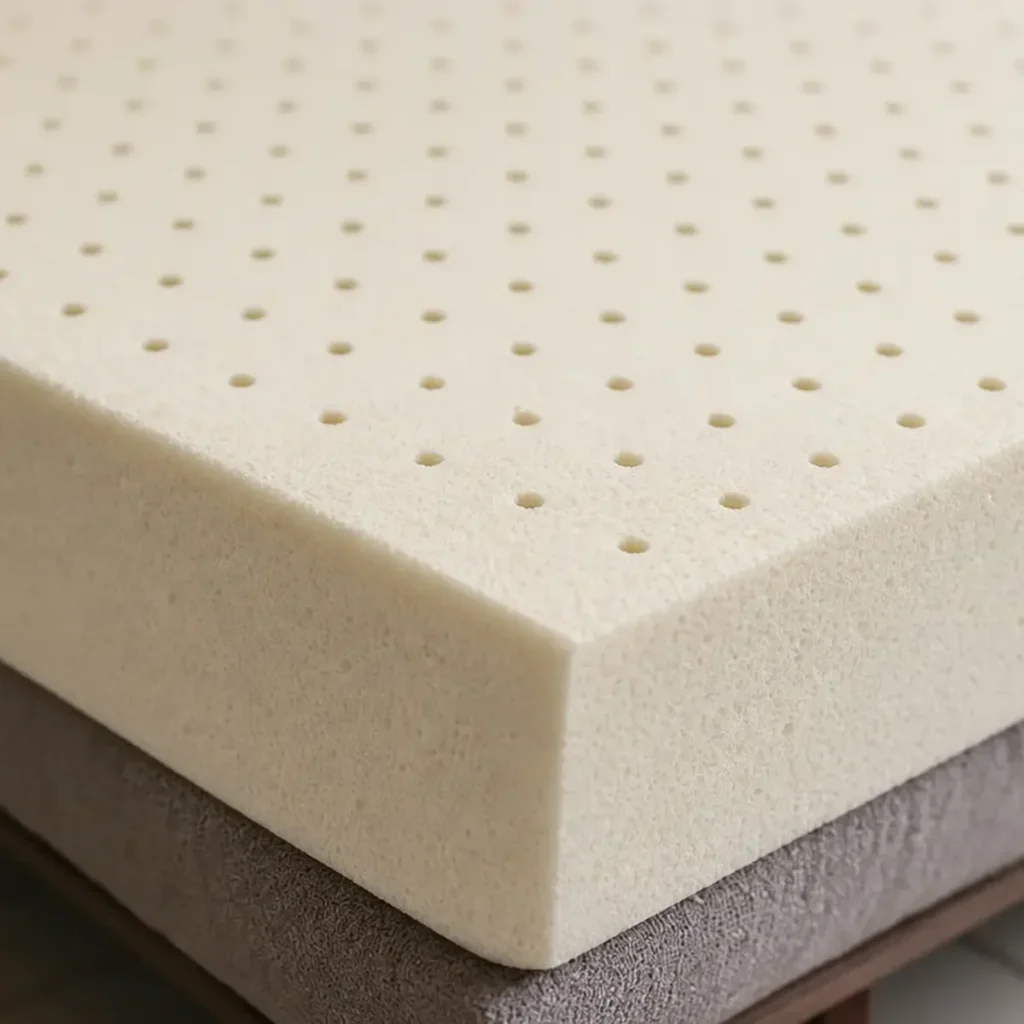
Natural latex foam is elastic and recovers its shape quickly. It can compress under concentrated weight while continuing to support surrounding areas. Cellular spaces and ventilation holes in some products may promote airflow, although actual thermal comfort also depends on the cover, bedding, temperature, and room humidity.
Natural latex may reduce reliance on certain synthetic foams, but it should not automatically be described as producing “no off-gassing.” Odor and emissions may come from covers, adhesives, other layers, or manufacturing processes. Parents should check the composition and testing information for the actual product and air a new mattress according to the manufacturer’s directions before use.
Similarly, “hypoallergenic” means designed to reduce the likelihood of a reaction; it does not mean allergen-free. A child with a diagnosed natural-latex allergy should not be assumed to be protected by a fabric cover. Parents should consult a pediatrician or allergy specialist.
Families considering a Ventry natural-latex product should choose a model specifically identified for the child’s age and bed. Its firmness, fit, and individual instructions should be checked directly. The “Good Sleep… Good Health.” philosophy should begin with age-appropriate safety before additional comfort or material features are considered.
Latest Post
 29 March 2568
 29 March 2568