


From Prof. Charoen’s Cervical Pillow Research to Choosing a Pillow and Mattress for Neck and Back Pain
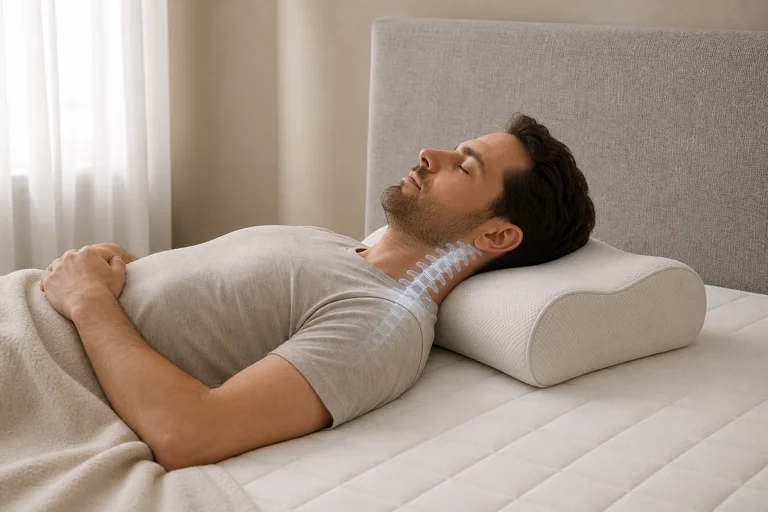
Pillows and mattresses are not a treatment for every cause of neck or back pain. However, bedding with a shape, height, and firmness suited to the user may help with sleep posture, reduce pressure, and partly reduce morning discomfort. The 1983 work of Prof. Emeritus Dr. Charoen Chotigavanich and colleagues is an important historical record of cervical pillow development in Thailand, while modern research shows that pillow effects vary by shape, height, material, sleep position, and the individual user — so no single pillow is best for everyone.
This article provides general education, not a diagnosis or individualized advice. Anyone with severe, persistent, or neurological symptoms should consult a physician.
Prof. Emeritus Dr. Charoen Chotigavanich is the founder and an executive of Ventry. This article therefore separates the brand’s history from its medical conclusions, and cites academic sources that readers can verify directly.
How Neck Pain, Back Pain, and Sleep Are Related
Neck and back pain are not caused by bedding alone. Causes may include muscles and tendons, daytime posture, prolonged sitting or standing, injury, degeneration of joints or spinal discs, and conditions of the nervous system and other organs.
Professor Emeritus Dr. Charoen Chotigavanich explains in an educational article on “Back Pain” for the Faculty of Medicine Siriraj Hospital that back pain can take many forms, ranging from localized pain to radiating pain, numbness, or weakness when the nervous system is affected. He also notes that slouching or remaining in the same position for long periods can increase strain on the spinal joints and muscles. [1]
During sleep, the body rests on a pillow and mattress continuously for several hours. If a pillow is too high or too low, the neck may remain bent forward or tilted back for a long time. If a mattress is too soft or too firm for the body, certain areas may sink or bear excessive pressure. However, waking up in pain does not always prove that the bedding is the cause — symptoms, daytime activity, prior health conditions, and the bedding itself should all be considered together.
The “Cervical Pillow for the Management of Cervical Spondylosis”
In 1983, Prof. Emeritus Dr. Charoen Chotigavanich, together with Ajarn Boontham Nithi-Uthai and Ajarn Yongyoudh Vajaradul, published an article titled “Cervical pillow for the management of cervical spondylosis” in the Siriraj Medical Journal, Volume 35, Issue 7, pages 603–611. [2]
Siriraj Library records confirm the title, authors, publication year, and journal details. A contemporary 1984 article in Mor Chao Ban magazine reported that Prof. Charoen and colleagues developed and adapted a cervical support pillow, choosing latex foam so the neck-support section would hold its shape longer than materials that compress easily, and that the work received an award from Thailand’s National Research Council. [3] This concept forms part of the product development history of Ventry.
The core idea behind this work is that a pillow’s role is not only to support the head, but to support the neck and keep the sleeping posture close to the natural alignment of the cervical spine — particularly when the user must remain in the same position for many hours.
Prof. Charoen’s Work on Back Pain and Back-Muscle Mechanics
Prof. Charoen’s interests were not limited to cervical pillows. He co-authored the research paper “Lumbar paraspinal compartment pressure in back muscle exercise,” which studied intramuscular pressure alongside the lumbar spine in volunteers during various postures and lifting. The study reported that pressure while sitting was higher than while lying down, standing, or bending forward, helping to illustrate the relationship between posture and back-muscle activity. [4]
He also authored the educational article “Ouch! Such Back Pain” and work on occupational back pain, emphasizing that the causes of back pain are diverse — ranging from behavior and posture to diseases of the spine itself. [5]
The shared principle across this body of work is that pain management should consider the whole system, rather than being judged solely by the words “firm” or “soft” — and that a pillow or mattress should not be expected to resolve every medical issue.
What Modern Evidence Says About Cervical Pillows
A 2021 systematic review and meta-analysis that gathered 35 pillow studies found that certain pillow types were associated with reduced neck pain on waking, reduced neck-pain-related disability, and greater satisfaction, with positive signals for rubber and spring pillows — but no clear change in sleep quality among people with chronic neck pain. The researchers also noted that a pillow’s shape and height may affect cervical alignment more than material alone. [6]
The appropriate conclusion, therefore, is that a cervical pillow may be a supplementary aid for some people, but it is not a primary treatment, and no single design suits everyone.
How to Choose a Pillow When You Have Neck Pain
1. Start with your sleep position
- Back sleepers: The pillow should support the neck’s curve without pushing the head too far forward.
- Side sleepers: The height should fill the gap between the head and the mattress so the head, neck, and torso stay roughly aligned.
- Stomach sleepers: This position often requires the neck to stay turned for long periods. Those with neck pain may try reducing time in this position or using a lower pillow, if there is no individual contraindication.
2. Judge height by fit, not marketing
Shoulder width, mattress softness, and sleep position all change what height is appropriate. A pillow that fits well on a firm mattress may be too high when used on a mattress where the shoulders sink more deeply.
3. Choose support that holds its shape without causing pressure pain
Materials with good recovery, such as latex, may help the neck-support area hold its shape, but comfort still depends on shape, firmness, height, temperature, and each person’s sensitivity to pressure. Material alone does not guarantee the result.
4. Trial and track your symptoms
Where possible, trial a pillow systematically — note pain, stiffness, night waking, and comfort on waking. If symptoms worsen, or numbness, weakness, or radiating pain increase, stop use and seek advice from a healthcare professional.
So How Firm Should a Mattress Be for Back Pain?
The belief that “back pain requires the firmest possible mattress” does not match the full body of evidence. A systematic review on mattresses and back pain found that medium-firm mattresses tended to promote comfort, sleep quality, and spinal alignment better than extremely firm or extremely soft surfaces for a number of people. [7]
“Medium-firm” is not a single standard across brands, and the feeling still changes with body weight, sleep position, mattress construction, and familiarity. Buyers should look at measurable information — firmness rating, layer construction, thickness, compression, recommended weight range, trial period, and return policy — rather than relying on the phrase “for your health” alone.
Latex is notable for its recovery and responsiveness to pressure, but there is not yet sufficient evidence to say that every latex product treats back pain or is superior to other materials for everyone. What matters more is choosing a level of support that fits your body shape, weight, and sleep position.
When to See a Doctor
Seek a medical evaluation when neck or back pain:
- Continues to worsen or does not improve
- Follows an accident or injury
- Radiates down an arm or leg
- Comes with numbness, muscle weakness, or difficulty walking
- Involves problems controlling urination or bowel movements
- Occurs together with fever, unexplained weight loss, or other illness
Pillows and mattresses may help with sleep posture and comfort, but they should never delay a necessary diagnosis or treatment.
Choose Bedding Starting From Your Own Body
Anyone choosing a pillow or mattress should start from sleep position, body weight, pillow height, firmness level, and symptoms on waking — rather than judging by material alone. You can browse Ventry’s health products or the full shop to compare shapes and product details. If you’re not sure where to start, feel free to contact Ventry’s team for product information.
For example, the Ventry PT3 Neck Support Pillow is designed with a neck-support contour based on the body-alignment principles discussed above, and may be one option worth considering for those looking specifically for a neck-support pillow shape. That said, suitability still depends on body shape, sleep position, and individual symptoms.
Advice from the product team is not a medical diagnosis. Anyone with an underlying condition, radiating pain, numbness, weakness, or severe symptoms should consult a healthcare professional before choosing sleep accessories.
Conclusion
The work “Cervical pillow for the management of cervical spondylosis” by Prof. Emeritus Dr. Charoen Chotigavanich and colleagues is an important academic record of cervical pillow invention in Thailand, and reflects an idea that remains valuable today: a pillow should support the neck in a way that fits the body, not just cushion the head.
Evidence gathered since then helps fill in a clearer picture — pillows and mattresses may play a role in waking symptoms, comfort, and body alignment, but the outcome depends on the specific product and the specific user. No single material or shape suits everyone, and bedding is not a substitute for medical diagnosis or treatment.
References
- Charoen Chotigavanich. Back Pain. Faculty of Medicine Siriraj Hospital, Mahidol University. si.mahidol.ac.th
- Chotigavanich C, Nithi-Uthai B, Vajaradul Y. Cervical pillow for the management of cervical spondylosis. Siriraj Medical Journal. 1983;35(7):603–611. medlibebook.si.mahidol.ac.th
- Pornthip Chaovariyavong. Sleep Comfortably and Recover from Neck Pain. Mor Chao Ban Magazine. May 1984. doctor.or.th
- Songcharoen P, Chotigavanich C, Thanapipatsiri S. Lumbar paraspinal compartment pressure in back muscle exercise. Journal of Spinal Disorders. 1994;7(1):49–53. doi:10.1097/00002517-199407010-00007. murex.mahidol.ac.th
- Charoen Chotigavanich. Ouch! Such Back Pain. Faculty of Medicine Siriraj Hospital, Mahidol University. si.mahidol.ac.th
- Pang JPCY, Tsang SMH, Fu ACL. The effects of pillow designs on neck pain, waking symptoms, neck disability, sleep quality and spinal alignment in adults: A systematic review and meta-analysis. Clinical Biomechanics. 2021;85:105353. doi:10.1016/j.clinbiomech.2021.105353. PubMed
- Caggiari G, et al. What type of mattress should be chosen to avoid back pain and improve sleep quality? Review of the literature. Journal of Orthopaedics and Traumatology. 2021;22:51. doi:10.1186/s10195-021-00616-5. PubMed
Latest Post
 29 March 2568
 29 March 2568
 29 March 2568