


A Low-Dust Mattress: Sleeping Comfortably with Less Concern About Dust Mites and Allergies

Have you ever awakened feeling itchy, sneezing repeatedly, congested, or short of breath? These symptoms can have many causes, but for people who are sensitive to allergens, dust mites and allergenic particles accumulating in the bedroom may be among the triggers.
A “dust-free mattress” should not mean one that is completely free of dust or mites. Every type of mattress can accumulate skin flakes, dust, and allergens over time. A more accurate meaning is a mattress and sleeping environment designed and maintained to limit dust accumulation, control moisture, and permit regular cleaning.
What Are Dust Mites, and Why Do Mattresses Attract Them?
Dust mites are microscopic arthropods that cannot be seen with the naked eye. They are not insects that bite people. They feed primarily on shed skin cells from humans and pets, which is why they are commonly found in mattresses, pillows, blankets, carpets, soft toys, and upholstered furniture—places where skin particles collect and moisture can be retained.
A mattress provides favorable conditions because it receives warmth, perspiration, and skin particles for several hours each night. The main allergy triggers are not limited to living mites; they also include proteins in mite droppings and body fragments. When these particles are disturbed by movement, bed-making, or cleaning, a sensitive person may inhale them.
Symptoms potentially associated with dust-mite allergy include sneezing, a runny or blocked nose, itchy or watery eyes, and coughing. Dust mites may trigger coughing, wheezing, or chest tightness in some people with asthma. Sensitive skin may also become itchy or irritated. These symptoms do not establish a diagnosis, because pollen, mold, pets, and other factors can produce similar reactions.
Can Natural Latex Reduce Dust-Mite Accumulation?
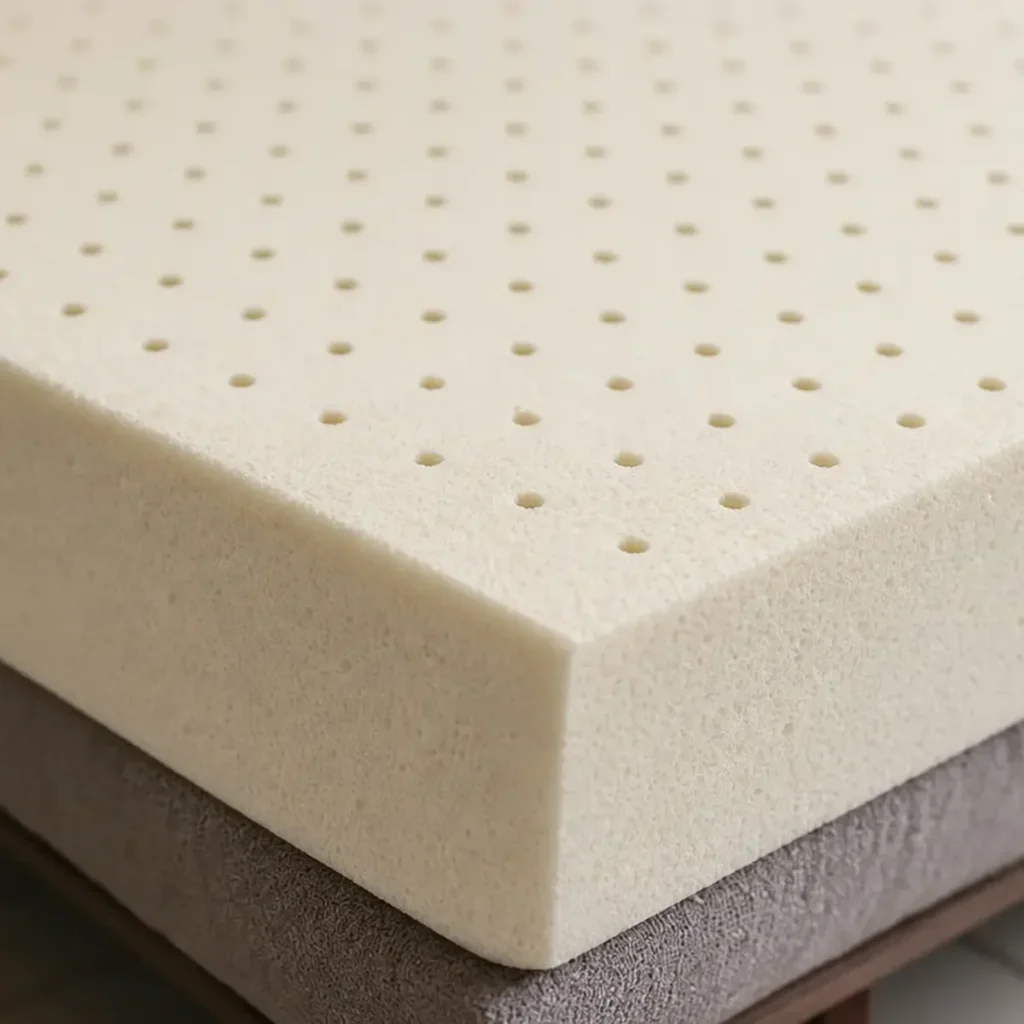
A latex-foam core has a continuous, elastic cellular structure without the large open cavities found in some spring constructions. When combined with a close-fitting cover and kept dry, this structure may make it more difficult for dust and skin particles to penetrate deeply into the core. Ventilation holes used in many latex products can also promote airflow and reduce trapped moisture.
One study found roughly three times fewer mites on foam rubber than on innerspring mattresses. (PubMed) Another study, however, found no clear difference in allergen levels between foam and spring mattresses. Any mattress can still collect allergens in its cover, sheets, and surface dust. (PubMed)
When considering a Ventry natural-latex mattress, the model’s construction, ventilation, and ease of cover care should be evaluated alongside the core material. The “Good Sleep… Good Health.” philosophy becomes more practical when an appropriate mattress is combined with ongoing care of the sleeping environment.
Anyone with a diagnosed natural-latex allergy should inspect the product composition and consult a healthcare professional before use. Natural-latex allergy and dust-mite allergy are different conditions.
Maintaining the Mattress and Bedroom to Reduce Allergens
Dust-mite control is most effective when several measures are combined rather than relying on a mattress replacement alone. Practical steps include:
- Encase the mattress and pillows completely in zippered covers designed to block mite allergens.
- Wash sheets, pillowcases, and blankets weekly according to their care labels, then dry them completely.
- Keep bedroom relative humidity as low as practical. A range of approximately 30-50% generally helps limit dust-mite growth. (CDC)
- Vacuum the floor, bed base, and area around the mattress regularly. Use a high-efficiency filter where possible and avoid vigorously shaking fabrics.
- Ventilate the room and air sheets or blankets in sunlight until dry. Sun airing helps reduce moisture but does not replace washing.
- Do not leave a latex core in strong, direct sunlight for extended periods, as heat and ultraviolet exposure may degrade the material. Air it in a dry, shaded place and follow the manufacturer’s instructions.
- Reduce dust reservoirs near the bed, including soft toys, thick carpets, and decorations that are difficult to clean.
Allergy practice guidance recommends combining mite-resistant encasements, regular laundering, and humidity control, since a single intervention may not be sufficient. (AAAAI)
If you’re looking for a mattress that’s easier to maintain, Ventry offers a range of latex mattresses designed with breathable construction. If you’re not ready to replace a full mattress, a latex topper or latex pillow is a way to reduce dust accumulation at the points of most frequent contact first. For best results, combine any of these with mite-resistant encasements and the care practices described above.
Frequently Asked Questions
Q: Is there a mattress that never contains dust or dust mites?
A: No mattress can remain completely dust-free throughout its use. A cleanable construction, protective encasement, and humidity control can, however, reduce accumulation.
Q: Is a latex mattress suitable for everyone with allergies?
A: Latex can form part of an easily maintained sleeping environment, but it does not provide complete dust-mite protection. Anyone with a natural-latex allergy should check the materials and seek professional medical advice before use.
Q: Is placing the mattress or bedding in sunlight enough?
A: No. Sunlight and ventilation help reduce moisture, but bedding must still be washed and dried completely, while the room and protective covers require regular care.
Latest Post
 29 March 2568
 29 March 2568